Katja Simmons · 18 October 2026
Cross-Sector Alliances Form Through Finley Creek Restoration Initiatives
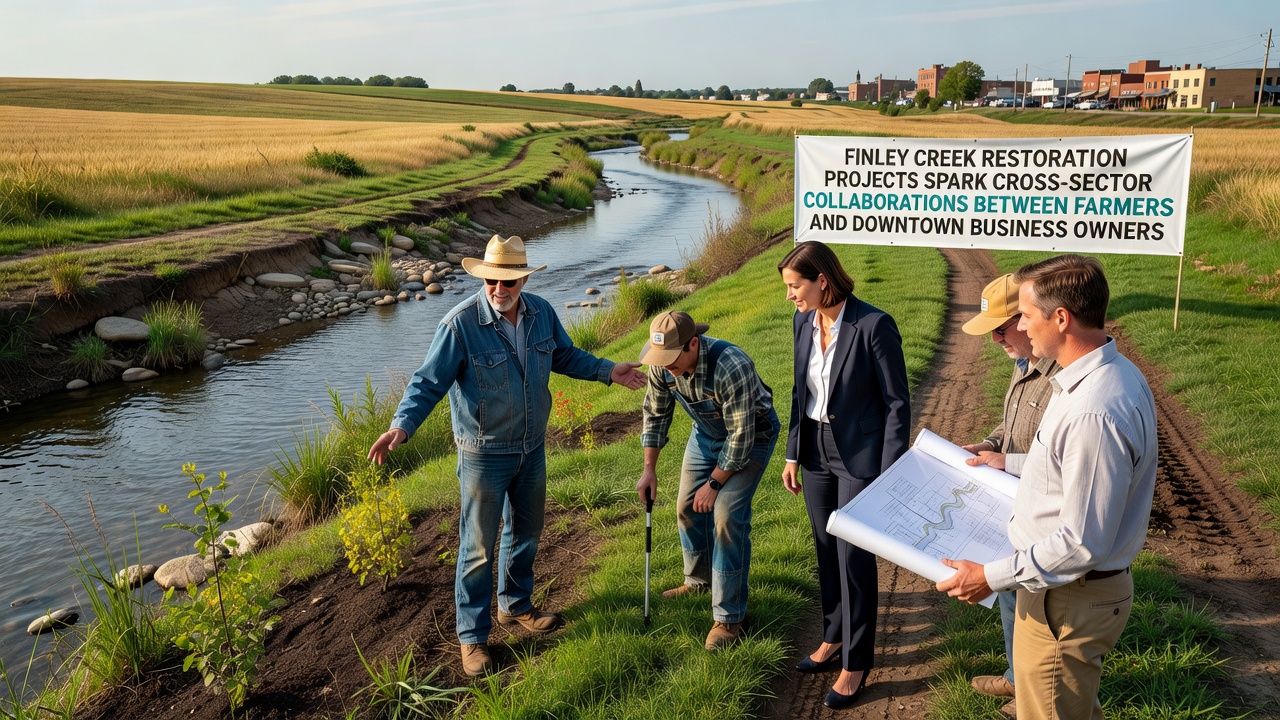
Restoration work along Finley Creek has drawn agricultural producers and downtown merchants into joint planning sessions since the initial surveys began in early 2025, and local records show that shared concerns over water quality and flood management prompted the first formal agreements by summer of that year. County documents indicate that participating farms cover roughly 2,400 acres upstream while downtown properties span twelve blocks of commercial space, creating measurable overlap in drainage patterns and economic interests.
Project Scope and Timeline Details
Engineering assessments completed in March 2025 identified erosion hotspots and nutrient runoff points that affect both crop irrigation intakes and retail district stormwater systems, and crews started installing native vegetation buffers along three miles of creek bank by July. Data collected through automated sensors shows a 14 percent reduction in sediment load at the downstream monitoring station during the first spring thaw after planting, according to measurements released by the county public works department. Additional phases scheduled for October 2026 include installation of controlled overflow structures and expansion of pollinator habitat strips that border both farmland and the edge of the central business district.
Partnership Mechanisms and Resource Sharing
Farm operators contribute equipment and labor for bank stabilization while business owners supply funding for native seed mixes and interpretive signage, and joint committees meet monthly to review progress metrics. One study conducted by the state university extension service tracked participation rates and found that 27 farms and 19 downtown establishments had signed memoranda of understanding by September 2025. These agreements outline cost-sharing formulas that allocate 60 percent of structural expenses to agricultural partners and 40 percent to commercial interests based on acreage and square footage affected by creek flow.
Environmental Monitoring Outcomes
Water quality tests performed quarterly reveal declining nitrate concentrations at four sampling sites between the upstream farms and the downtown reach, and researchers attribute part of the improvement to coordinated fertilizer application schedules developed during collaboration workshops. A report published by the U.S. Department of Agriculture notes similar watershed projects in other regions achieved comparable nutrient reductions when multiple sectors aligned on best-management practices. Observers note that the Finley effort stands out because it incorporates real-time data dashboards accessible to both farmers and merchants, allowing rapid adjustments to irrigation timing and parking-lot drainage controls.
October 2026 Milestones and Community Events
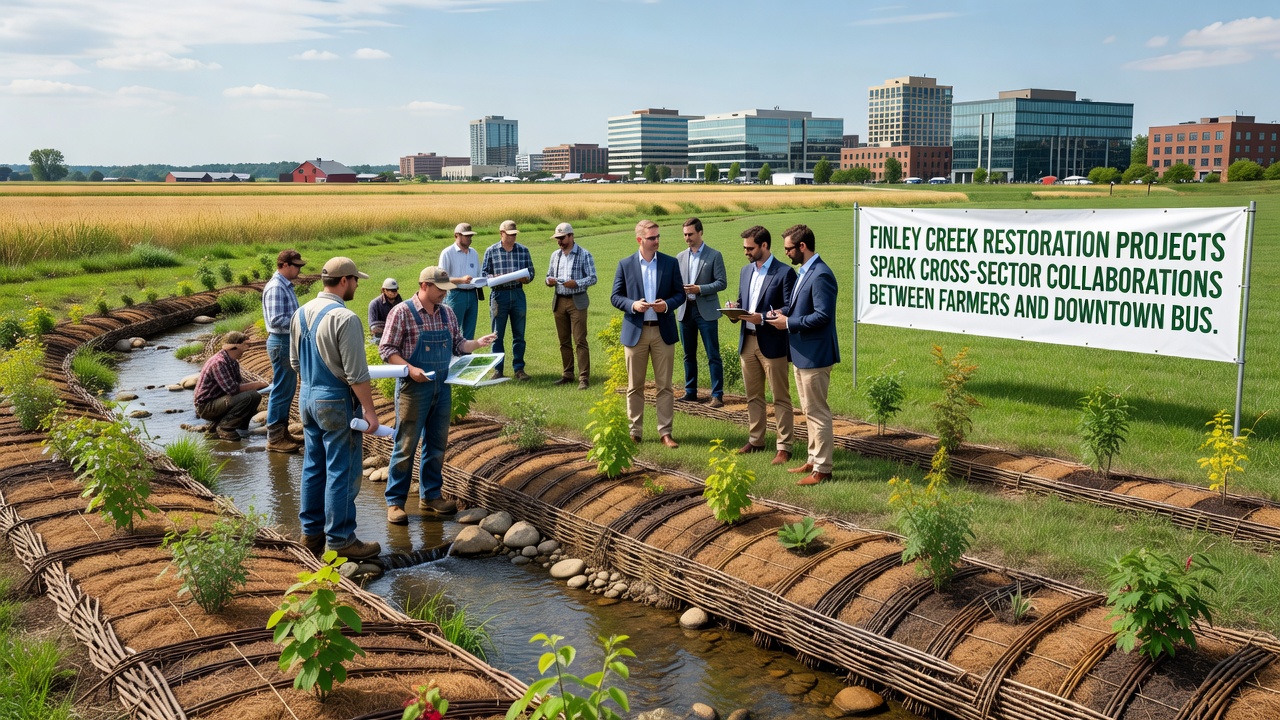
Officials have scheduled a public demonstration day for October 17, 2026, during which participants will showcase completed buffer zones and present updated flood modeling to residents, and advance registration indicates more than 300 attendees from surrounding townships. The event coincides with release of a mid-project evaluation prepared by the regional conservation district that will include before-and-after photographs along with economic impact estimates derived from local tax records. Those figures reveal that reduced flood insurance claims in the downtown corridor have already offset a portion of the matching grants used for the restoration work.
Broader Regional Context
Similar cross-sector models appear in other agricultural communities, and a review issued by Agriculture and Agri-Food Canada highlights how shared watershed governance structures can lower administrative costs while accelerating habitat recovery timelines. Finley organizers adapted several elements from those Canadian examples, including standardized reporting templates and rotating leadership roles between agricultural and commercial representatives. Data compiled through the state environmental agency shows that Finley Creek now meets baseline criteria for macroinvertebrate diversity at two additional monitoring stations compared with readings from 2024.
Conclusion
Records maintained by the county clerk document steady expansion of the partnership network through the end of 2025, and projections prepared for the October 2026 review estimate full project completion by late 2027 if current participation levels hold. The combined efforts continue to generate coordinated maintenance schedules and shared equipment inventories that serve both upstream fields and downtown infrastructure without requiring separate administrative bodies.