Iris Wolf · 6 September 2026
Finley Museum Exhibit Showcases Pioneer Journals Shedding Light on Trade Paths and Frontier Existence During the 19th Century
Opening the Pages of History
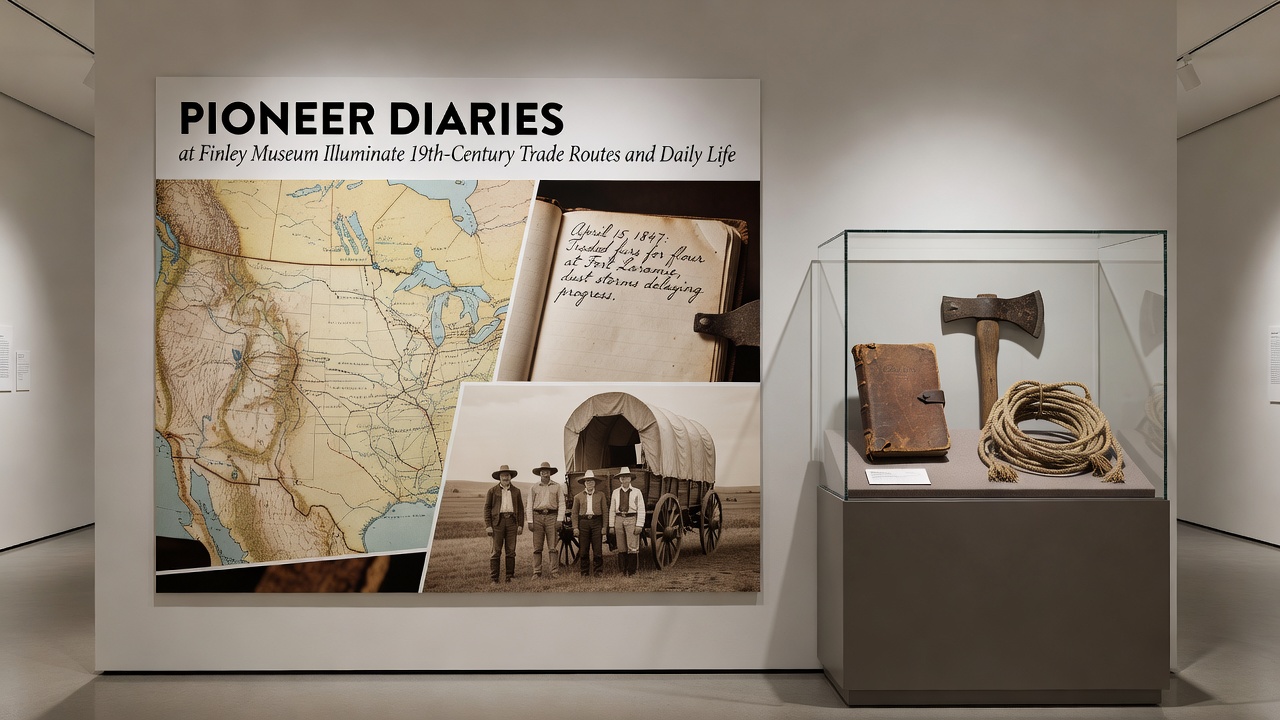
Researchers at the Finley Museum have prepared an exhibit that draws directly from preserved pioneer diaries, and these documents detail the movement of goods along 19th-century trade routes while recording the routines of daily frontier life, with the full collection scheduled to open to visitors in September 2026. The materials include handwritten entries from individuals who traveled westward, noting supply exchanges at forts and settlements along established paths such as those connected to the Oregon and Santa Fe trails.
Curators selected over forty volumes for public viewing, and these texts describe the transport of textiles, tools, and foodstuffs in exchange for furs and agricultural products. One entry from 1847 records the barter of flour and ammunition at a Missouri River outpost, while another from 1852 lists the cost of wagon repairs in terms of hides and dried meat. These observations align wth records maintained by the National Park Service, which tracks similar exchanges along historic corridors.
Trade Networks Documented in Detail
Diaries in the collection map the flow of commerce through specific locations, and they identify key waypoints where travelers restocked and negotiated prices. Entries frequently mention the exchange rates for tobacco, coffee, and iron implements, providing quantitative data that historians cross-reference with ledgers from trading companies. A journal kept by a merchant in 1861 notes the arrival of a caravan carrying bolts of cloth from eastern mills, and it lists the quantities traded for local grain and livestock.
Additional volumes describe seasonal variations in trade volume, and they connect these fluctuations to weather conditions and river levels that affected wagon trains. Data from the exhibit shows that fall shipments often carried higher volumes of preserved foods, while spring movements focused on seed and equipment. Observers note that these patterns match findings from academic studies at institutions such as the University of Nebraska, which has analyzed comparable manuscript collections.
Daily Routines Captured in Personal Accounts
The diaries extend beyond commerce to record household tasks, meal preparation, and child-rearing practices under frontier conditions, and they provide timelines for activities such as baking bread in outdoor ovens and preserving meat through smoking. Multiple entries from 1849 describe the process of setting up temporary camps, including the collection of firewood and the construction of simple shelters using available timber and canvas.
Women’s journals in the set detail the management of limited water supplies during dry stretches, and they record the use of local plants for medicinal purposes alongside imported remedies. One account from 1855 lists the daily allocation of flour and beans for a family of six, while noting the supplemental hunting of small game. These descriptions correspond with broader historical data compiled by Library of Congress archivists, who maintain digitized versions of similar frontier manuscripts for public access.
Contextual Materials and Supporting Evidence
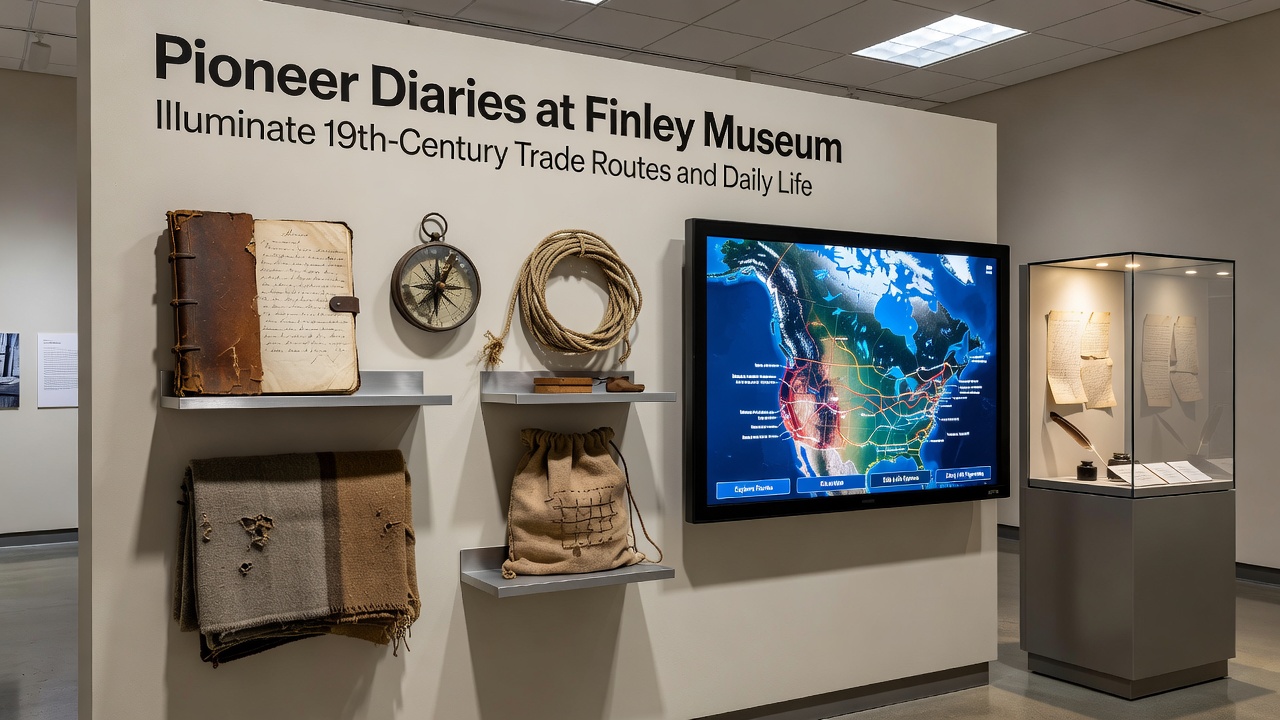
Museum staff have paired the diaries with period maps and artifact replicas, and these elements illustrate the geographic scope of the routes referenced in the texts. Replica trade goods include cast-iron cookware and wool blankets that match items described in the entries. Interactive stations allow visitors to compare diary measurements of distance traveled per day against modern estimates derived from satellite imagery of the same terrain.
Archival photographs from the 1870s supplement the written records, and they show wagon configurations and camp layouts consistent with the narrative descriptions. The exhibit also incorporates transcriptions that preserve original spelling and phrasing, enabling researchers to study linguistic patterns that evolved among traveling groups. Such transcriptions have already supported projects at several state historical societies focused on migration demographics.
Conclusion
The Finley Museum presentation compiles primary sources that together document both commercial exchanges and household operations along 19th-century pathways, and the materials scheduled for September 2026 provide a consolidated view of these interconnected aspects of frontier movement. Visitors gain access to unaltered records that continue to inform studies of trade logistics and daily survival strategies from that era.