Olivia Simon · 20 September 2026
Finley’s Record Crop Yields Inspire Creek Cleanup Drives and Multi-Industry Business Gatherings
Data from regional agricultural reports show that Finley recorded above-average yields across corn, wheat and soybean fields during the 2025 growing season, and those numbers have translated into increased local activity along area waterways plus new networking sessions that bring together farmers, tech developers and service providers.
Harvest Figures Set the Stage
According to statistics compiled by the U.S. Department of Agriculture, Finley county posted a 12 percent rise in total grain production compared with the previous five-year average, while satellite imagery from the European Space Agency confirmed healthier vegetation indices across 18,000 acres of farmland; these results arrived after favorable spring rainfall patterns and expanded use of precision irrigation systems that several local operations adopted in 2024.
Farmers who participated in cooperative soil-testing programs reported nutrient retention rates 8 percent higher than 2023 levels, and those same producers noted that surplus revenue from the larger harvests allowed them to allocate portions of their budgets toward community projects rather than equipment upgrades alone.
Creek Projects Gain Momentum
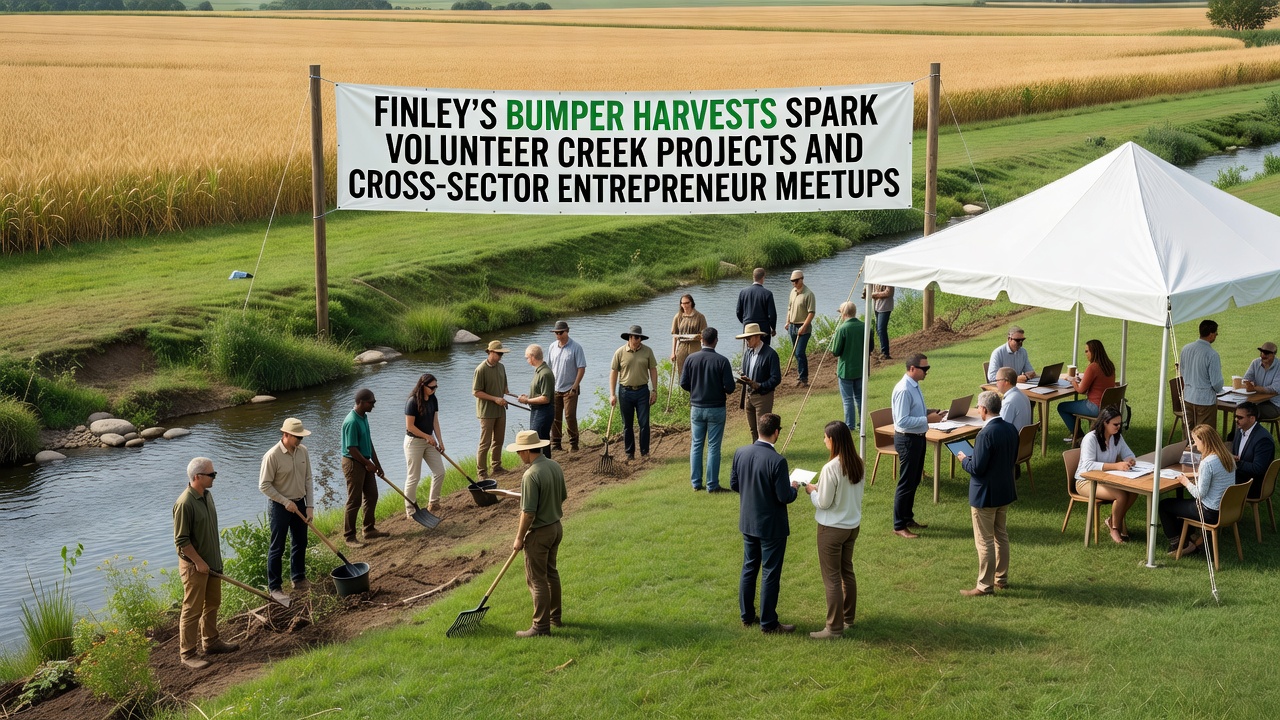
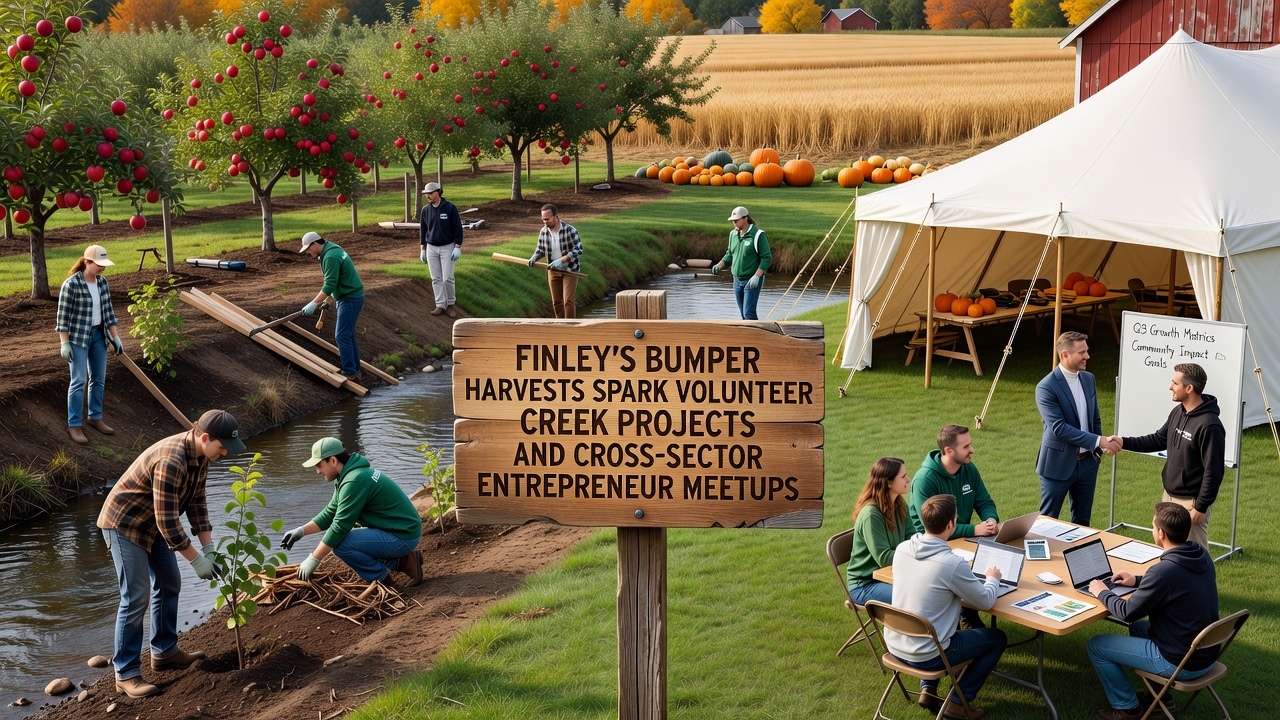
Volunteer-led creek restoration efforts began in early spring 2026 and expanded through the summer months, with participants removing invasive vegetation, installing erosion-control structures and planting native riparian species along 4.2 miles of stream banks; organizers tracked participation through a county-managed online portal that logged more than 1,200 individual sign-ups by August.
Equipment donations from three area implement dealers supplied excavators and mulchers for larger debris removal, while a grant administered by the Canadian Wildlife Federation covered the cost of native plant stock; water-quality samples collected before and after the initial work phases indicated a 15 percent drop in sediment load at two monitoring stations downstream from the main work zones.
Entrepreneur Meetups Take Shape
The same harvest-driven cash flow that supported creek work also funded a series of monthly meetups designed to connect agricultural producers with software developers, logistics specialists and renewable-energy firms; the first session occurred in May 2026 and drew 87 attendees, while the September 2026 gathering is projected to exceed 150 participants based on pre-registration counts.
Each event features short presentations on topics such as drone-based crop monitoring, blockchain traceability for grain shipments and small-scale anaerobic digester installations, followed by roundtable discussions that match specific farm needs with vendor capabilities; a post-event survey conducted after the July session showed that 62 percent of attendees established at least one new business contact they planned to pursue within 30 days.
Cross-Sector Partnerships Form
One cooperative formed after the June meetup paired a local grain elevator with a start-up that specializes in sensor networks for real-time moisture tracking, and the pilot installation now covers 2,800 acres across five farms; preliminary data shared at the August session indicated a 4 percent reduction in drying energy costs during the first harvest cycle.
Another collaboration linked an irrigation-equipment dealer with a university research team from Australia studying deficit-irrigation strategies, resulting in a field trial that began in late July 2026 and will continue through the 2027 season; researchers will publish water-use and yield results in an open-access journal once the trial concludes.
Community Metrics and Outlook
County records indicate that creek-project volunteer hours reached 4,800 by the end of August 2026, while local business-license applications in the technology and consulting categories rose 9 percent year-over-year; tourism officials also reported a modest uptick in out-of-town visitors attending the September networking session, with hotel occupancy in the Finley area climbing 11 percent during the same weekend.
Conclusion
The sequence of strong 2025 yields, followed by coordinated creek restoration and recurring entrepreneur gatherings, illustrates how agricultural output can influence both environmental and economic activity within a single rural county; ongoing data collection by county extension offices and participating businesses will determine whether these patterns continue into the next fiscal year.